

First Responders Therapy for Police, Fire, EMS and Corrections
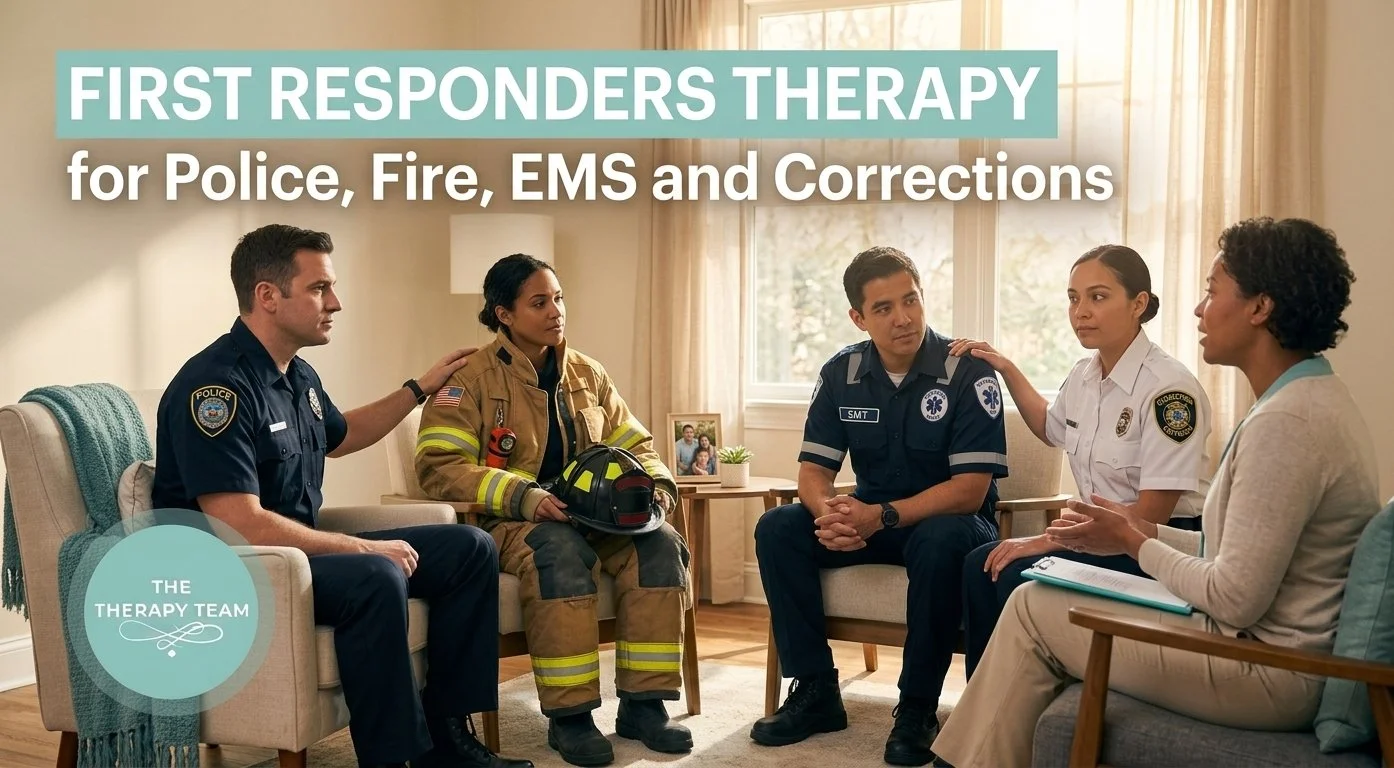
First responder’s therapy is specialized mental health counselling designed for police officers, firefighters, paramedics, EMS personnel, corrections officers, and dispatcher’s professionals whose nervous systems face repeated activation from critical incidents that most people encounter once, if ever. Unlike general talk therapy, it uses trauma-informed, body-based approaches that address what accumulates in the nervous system over years of frontline work.
The job asks you to stay calm in chaos, compartmentalize what you've witnessed, and show up for the next call. But the body keeps a running tab. This article covers who first responder’s therapy supports, the mental health challenges unique to emergency services, evidence-based treatment approaches, and how to access confidential care that fits around shift work.
What is First Responders Therapy
First responders therapy is specialized mental health counselling designed for police officers, firefighters, paramedics, EMS personnel, corrections officers, and dispatchers. Unlike general talk therapy, it uses trauma-informed approaches like EMDR, CBT, and somatic techniques that address what happens in the body not just the mind after repeated exposure to critical incidents.
Here's the pattern we see often: after years of responding to emergencies, the nervous system starts staying "on" even when the shift ends. You might notice you can't relax at home, or that you're scanning for threats in places that are perfectly safe. Standard counselling often misses this because it focuses on thoughts and feelings without addressing the body's alarm system.
First responder therapy works differently. It uses "bottom-up" methods that help calm the nervous system while processing difficult memories. The goal isn't to forget what you've seen it's to help your brain file those experiences so they stop hijacking your present.
Who first responders therapy supports
This type of therapy serves frontline emergency personnel across different roles, as well as partners and family members affected by the demands of the work.
Police officers
Police officers deal with use-of-force incidents, constant threat exposure, public scrutiny, and rotating shifts that disrupt sleep. The combination of hypervigilance on duty and difficulty unwinding at home creates a pattern that wears on the body over time.
Firefighters
Firefighters face repeated trauma at emergency scenes, physical danger, and sometimes the loss of colleagues. The unpredictability of calls routine one moment, catastrophic the next keeps the body's alarm system activated.
Paramedics and EMS
Paramedics carry the weight of repeated patient loss, split-second medical decisions, and compassion fatigue. The emotional toll of not being able to save everyone builds up over months and years, often without a clear outlet.
Corrections officers
Corrections officers work in environments that demand constant vigilance, with regular exposure to violence and manipulation. Many feel isolated from mainstream mental health resources because few therapists understand what it's like to work inside an institution.
Dispatchers and communicators
Dispatchers often get overlooked, yet they experience secondary trauma from hearing distressing calls without being physically present. The helplessness of coordinating emergencies from a distance creates its own form of stress injury.
Military veterans and related frontline roles
Veterans transitioning to or from first responder work often carry overlapping trauma. The skills that made them effective in military service can also make civilian life and asking for help more complicated.
Why police, fire, EMS and corrections workers need specialized trauma care
Generic therapy often misses the mark because it doesn't account for the culture, stigma, or unique nervous system impacts of first responder work. A therapist who doesn't understand the job may unintentionally minimize experiences or offer advice that feels disconnected from reality.
A few factors make specialized care particularly important:
Cumulative trauma exposure: Unlike single-incident trauma, first responders face repeated exposure that compounds over time and builds up in the nervous system
Workplace culture: The "tough it out" mentality creates barriers to seeking help and can make symptoms feel like personal weakness
Operational stress injury: This term describes injury to the nervous system from the job itself not a character flaw or lack of resilience
Confidentiality concerns: Fear of career repercussions means therapists who understand chain-of-command dynamics and privacy are essential
Common mental health challenges first responders face
The challenges below often emerge gradually. They represent normal responses to abnormal job demands not signs of weakness.
PTSD and operational stress injury
Post-traumatic stress disorder in first responders often looks different than in civilians. Symptoms include intrusive memories of specific calls, avoidance of reminders, and a nervous system stuck in high alert.
"Operational stress injury" is a term increasingly used in the field because it frames the problem accurately as an injury from the work, not a mental illness or personal failing.
Burnout and compassion fatigue
Burnout refers to emotional exhaustion from chronic workplace stress. Compassion fatigue is secondary traumatic stress from helping others in crisis. Both can leave you feeling depleted, cynical, or detached from work that once felt meaningful.
Anxiety and depression
Anxiety and depression in first responders often show up as irritability, withdrawal, or physical symptoms rather than the "typical" presentations. You might not feel sad you might just feel numb, short-tempered, or physically exhausted.
Grief and cumulative loss
Unprocessed grief from repeated patient deaths, colleague losses, and the inability to save everyone accumulates over a career. Without space to process, it weighs on daily functioning.
Substance use and coping behaviours
Alcohol or other substances often become a way to numb symptoms, manage sleep, or decompress after shifts. This isn't a moral failing it's a sign the nervous system is looking for relief.
Moral injury
Moral injury is psychological distress from actions or inactions that violate your moral code. It's common in situations where you couldn't help, had to make impossible choices, or witnessed something that conflicts with your values.
Signs you may benefit from first responder therapy
The signs below often indicate the nervous system is stuck in survival mode. If several resonate, exploring support may be worthwhile.
Intrusive memories and hypervigilance
Flashbacks to specific calls, being unable to "switch off" at home, and constantly scanning for threats are signs the nervous system hasn't returned to baseline.
Sleep disruption and nightmares
Difficulty falling or staying asleep, vivid trauma-related dreams, and waking exhausted suggest the body is still processing threat even during rest.
Emotional numbness and disconnection at home
Feeling detached from family, unable to enjoy activities that once brought pleasure, or "going through the motions" can indicate emotional shutdown as a protective response.
Increased reliance on alcohol or substances
Using substances to relax, sleep, or cope more frequently than before is often a sign that other regulation strategies aren't working.
Declining performance and focus at work
Difficulty concentrating, making uncharacteristic errors, or dreading shifts can reflect the cognitive toll of an overloaded nervous system.
Evidence-based therapy approaches for first responders
Effective first responder therapy uses "bottom-up" approaches that work with the body and nervous system, not just cognitive techniques.
Deep Brain Reorienting for PTSD
Deep Brain Reorienting (DBR) is a newer modality that targets the brainstem's initial alarm response—the very first moment the brain registers threat. It helps process trauma at a neurobiological level, often reaching experiences that other approaches can't access.
EMDR for trauma processing
Eye Movement Desensitization and Reprocessing (EMDR) helps the brain reprocess traumatic memories so they no longer trigger the same level of distress. It's particularly effective for intrusive memories and flashbacks.
Polyvagal-informed therapy for nervous system regulation
Polyvagal theory explains how the vagus nerve governs safety and threat responses. Therapy informed by this approach helps restore the nervous system's ability to return to calm after activation.
Emotion-focused therapy
This approach helps identify and process difficult emotions that may have been suppressed or avoided. For first responders who've learned to compartmentalize, it creates space to feel what's been pushed aside.
Solution-focused and mindfulness-based therapy
Solution-focused therapy builds practical coping skills, while mindfulness-based approaches develop present-moment awareness. Both help manage symptoms day-to-day and are often combined with deeper trauma processing work.
How therapy helps first responders heal and recover
Therapy outcomes centre on restoring what trauma has disrupted—connection, purpose, and the ability to be present.
Restoring relationships at home
Many first responders notice they've become irritable, withdrawn, or emotionally unavailable to partners and children. Therapy helps rebuild emotional connection and reduce the distance that trauma creates.
Rebuilding compassion and sense of purpose
Compassion fatigue can erode the motivation and empathy that drew you to the work in the first place. Processing accumulated stress helps recover a sense of meaning.
Re-energizing daily life and work
Improved sleep, reduced hypervigilance, and feeling more like yourself are common outcomes. The goal is to be present—both on and off duty.
Support for first responder families and couples
First responder trauma affects the whole family system. Partners often notice changes before the first responder does—increased irritability, emotional distance, or difficulty being present.
Couples therapy and family therapy can address relationship strain, communication breakdowns, and help families understand what their first responder is experiencing. Family members may also experience secondary trauma from living with someone whose nervous system is chronically activated.
Confidentiality and overcoming stigma in first responder therapy
Stigma remains the leading barrier to first responders seeking help. The fear of being seen as weak, unfit for duty, or having information shared with supervisors keeps many from reaching out.
Here's what specialized first responder therapy offers:
Strict confidentiality: Therapists cannot disclose attendance or session content to employers without written consent, except in rare situations involving imminent safety
Normalizing help-seeking: Therapy is framed as maintenance and recovery, similar to physical fitness or injury rehabilitation
Private practice access: Seeking therapy outside workplace EAP programs provides additional privacy and separation from the department
How virtual therapy works around first responder shift schedules
Rotating shifts, overtime, and unpredictable schedules make traditional office-based therapy difficult to maintain. Virtual therapy removes many of those barriers.
Flexible scheduling: Evening and weekend appointments accommodate rotating shifts
No commute required: Sessions happen from home or any private location via secure video
Consistency despite schedule changes: Easier to maintain regular appointments when travel isn't required
Privacy: No risk of running into colleagues in a waiting room
Getting started with first responders’ therapy at The Therapy Team
The Therapy Team has been supporting first responders and their families across Ontario since 2016. Our therapists understand the culture, the stigma, and the unique demands of the job.
Getting started is straightforward:
Free consultation: Book a 15-minute call to discuss your concerns and see if it's a good fit
Therapist matching: Get paired with a clinician trained in first responder trauma
Flexible virtual sessions: Begin treatment with evening and weekend availability and no waitlist
Insurance coverage: Most extended health plans cover sessions
Reaching out is often the hardest part. Once you do, the process is designed to be as simple as possible.
Ready to take the next step?Book your free 15-minute consultation to connect with a therapist who understands what you're going through.
Frequently asked questions about first responders therapy
-
Most extended health insurance plans cover psychotherapy and social work services, including specialized first responder therapy. Checking your plan's mental health coverage details or contacting your provider directly can clarify what's included.
-
No. Therapy is strictly confidential, and therapists cannot disclose attendance or session content to employers without written consent. The only exceptions involve rare situations with imminent safety risks.
-
The length of therapy varies depending on individual needs and goals. Many first responders begin noticing shifts in symptoms within the first several sessions, while deeper healing unfolds over months.
-
Yes. Couples therapy and family therapy are available to help address relationship strain and support the whole family system affected by first responder stress.
-
No diagnosis is required to start therapy. You can begin whenever you feel you want support, whether symptoms are mild or more significant.
-
Yes. Virtual therapy with flexible evening and weekend scheduling is designed specifically to accommodate unpredictable first responder shift patterns.