

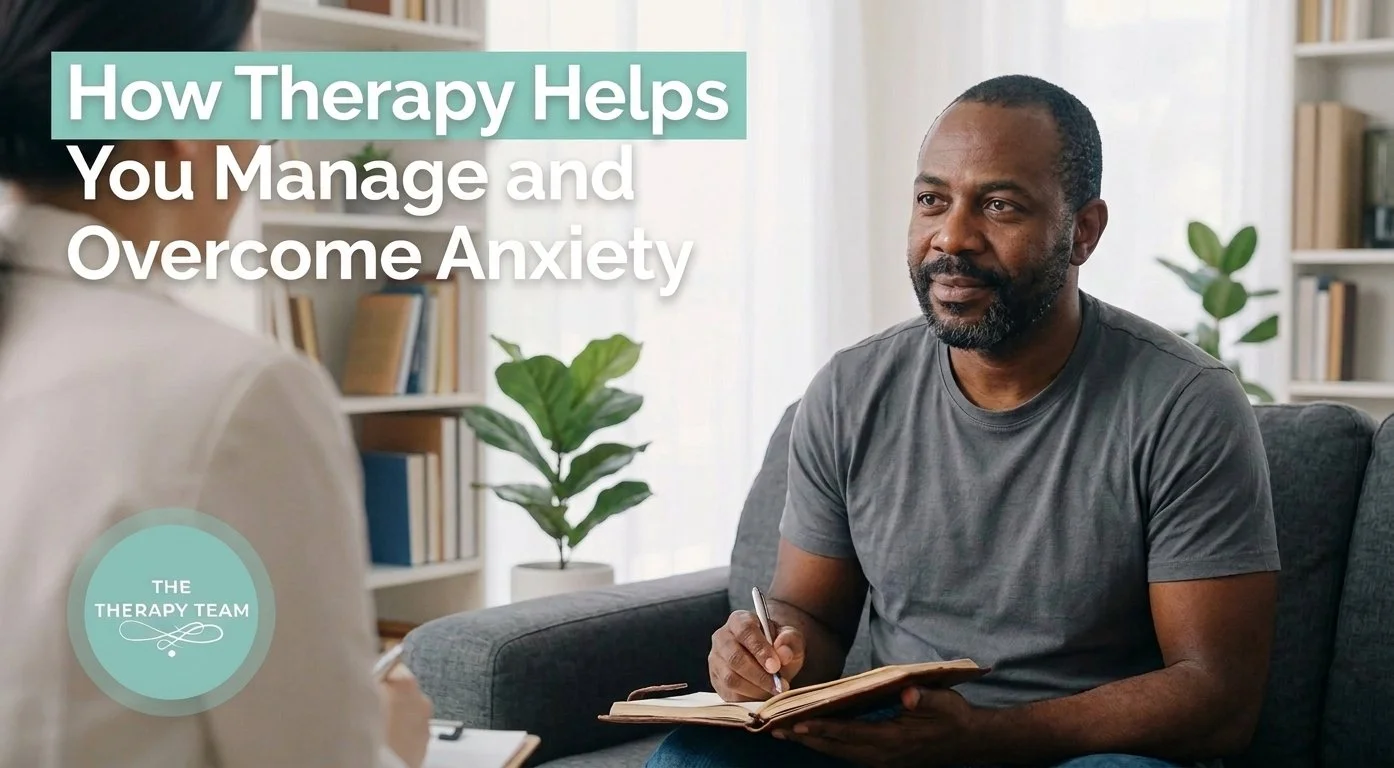
How Therapy Helps You Manage and Overcome Anxiety
You've tried deep breathing. You've told yourself to stop worrying. And yet the anxious thoughts keep circling, your chest stays tight, and sleep feels impossible. This isn't a failure of willpower it's your nervous system stuck in a pattern it learned to protect you.
Anxiety therapy helps you understand why your mind and body respond this way, and more importantly, how to shift those responses. This guide covers how anxiety shows up, the types of therapy that work, and what to expect when you start treatment.
What is Anxiety Therapy?
Anxiety therapy is a proven, effective way to manage fear and worry using methods like cognitive behavioral therapy (CBT), exposure therapy, and acceptance and commitment therapy (ACT). Many people notice real improvements within 8 to 16 sessions, though the timeline depends on the type and severity of anxiety involved.
What makes therapy different from just "talking about your problems" is the structure. A trained therapist helps you identify the thought patterns and nervous system responses that keep anxiety running in the background. You learn where your fear response comes from, what triggers it, and why it keeps showing up even when you know, logically, that you're safe.
Here's something worth knowing: anxiety is not a character flaw. It's a learned survival response your nervous system doing exactly what it was designed to do when it senses threat. Therapy helps you recognize this pattern and build new ways of responding that feel less overwhelming.
How anxiety shows up in the mind and body
Anxiety is not just "in your head." It lives in your body too, often in ways that feel confusing or even scary. You might notice racing thoughts, difficulty concentrating, or a constant sense that something bad is about to happen. At the same time, your heart races, your breathing gets shallow, your muscles tighten, or your stomach churns.
This happens because your nervous system activates what's called the fight-flight-freeze response. Even when no real danger exists, your body can shift into survival mode. You feel on edge, restless, or frozen in place and you may not understand why.
Mind symptoms: Racing thoughts, difficulty concentrating, catastrophic thinking, constant worry about the future
Body symptoms: Rapid heartbeat, shallow breathing, muscle tension, digestive issues, sleep disruption
Nervous system response: Your body perceives threat and activates survival mode, even when no actual danger is present
Signs you may benefit from anxiety therapy
Persistent worry that interferes with daily life
Everyone worries sometimes. But when worry becomes a constant companion affecting your work, your relationships, or your ability to take care of yourself it may be time to seek support. If the worry doesn't resolve on its own and starts shaping your decisions, therapy can help you regain a sense of control.
Physical symptoms like insomnia and chest tightness
Anxiety often shows up physically. Trouble sleeping, chest tightness, headaches, or stomach issues that medical tests haven't explained can all point to anxiety as the underlying cause. The symptoms are real, and they deserve attention.
Avoidance of people, places, or responsibilities
Avoiding situations that trigger anxiety can feel like relief in the moment. Over time, though, avoidance tends to make anxiety worse. It reinforces the belief that you can't handle what you're avoiding. If you've started withdrawing from life to escape discomfort, therapy can help you re-engage safely.
Panic attacks and intrusive thoughts
Sudden overwhelming episodes of fear or unwanted, repetitive thoughts that feel uncontrollable are signs that your nervous system is working overtime. Panic attacks and intrusive thoughts can be deeply distressing, but they respond well to treatment.
How therapy helps you manage and overcome anxiety
Therapy does more than teach you to cope with symptoms. It helps you understand where your anxiety comes from, how it operates, and what keeps it going. This deeper understanding creates space for lasting change.
A skilled therapist helps you identify the root causes of your anxiety whether that's underlying beliefs, past experiences, or attachment patterns that developed early in life. From there, you learn to recognize and challenge the distorted thinking that fuels fear.
Therapy also works with your nervous system directly. Through body-mind techniques, you learn to calm the survival response and build a greater sense of safety in your own body. Over time, you develop practical coping skills you can use when anxiety arises. And perhaps most importantly, therapy provides a non-judgmental space to explore difficult emotions many people find that simply being heard begins to shift something inside them.
Types of therapy used to treat anxiety
Cognitive behavioral therapy for anxiety
CBT is the most researched approach for anxiety. It focuses on identifying unhelpful thought patterns like catastrophizing or assuming the worst and replacing them with more balanced perspectives. You also learn to change behaviors that reinforce anxiety, often through small experiments that build confidence over time.
Exposure therapy for anxiety
Exposure therapy involves gradually and safely facing the situations, objects, or thoughts you fear. This process, sometimes called systematic desensitization, helps your brain learn that the feared outcome is unlikely or manageable. Over time, avoidance decreases and confidence grows.
EMDR therapy for anxiety
Eye Movement Desensitization and Reprocessing (EMDR) helps process distressing memories that may be contributing to anxiety. It's particularly useful when anxiety has roots in past trauma. Through guided eye movements or other bilateral stimulation, EMDR helps the brain reprocess stuck experiences.
Internal Family Systems therapy
IFS works with different "parts" of the self, including the protective parts that create anxiety. By understanding and building a relationship with these parts, you can reduce internal conflict and create more inner harmony.
Deep Brain Reorienting
Deep Brain Reorienting (DBR) is a newer approach that targets the brainstem's initial response to threat. It addresses anxiety at a deep neurological level, working with the body's earliest reactions before they become conscious thoughts or emotions.
Attachment-based psychotherapy
This approach explores how early relationship patterns shape current anxiety, particularly in relationships and self-worth. If your anxiety intensifies in close relationships or when you feel vulnerable, attachment-based work can help you understand why.
Mindfulness-based therapy
Mindfulness builds present-moment awareness, helping you interrupt anxious thought spirals before they escalate. By creating space between a trigger and your reaction, you gain more choice in how you respond.
Trauma-informed and body-mind approaches to anxiety
Anxiety often has roots in past experiences or unresolved stress. Trauma-informed care recognizes this connection and approaches treatment with sensitivity to how overwhelming experiences shape the nervous system.
Body-mind approaches address how stress and fear live in the body, not just the mind. Rather than focusing only on thoughts, body-mind approaches work with physical sensations, breath, and movement to release stored tension. This "bottom-up" processing works with the nervous system directly, helping you feel safer in your body before trying to change your thinking.
Online anxiety therapy versus in-person therapy
Research shows that online therapy is equally effective as in-person therapy for treating anxiety disorders. The convenience of attending from home can actually reduce barriers to getting started no commute, no parking, no childcare logistics.
For some people, being in a familiar environment makes it easier to open up. Others appreciate the flexibility of evening and weekend appointments that virtual platforms often provide.
| Factor | Online Therapy | In-Person Therapy |
|---|---|---|
| Accessibility | Attend from home or mobile | Requires travel to office |
| Scheduling | Often more flexible evening and weekend options | May have limited hours |
| Comfort | Familiar environment may reduce anxiety | Some prefer a dedicated therapy space |
| Effectiveness | Research supports equal outcomes | Research supports equal outcomes |
What to expect in your first anxiety therapy session?
The first session is about connection and understanding, not diving into deep work. Your therapist will ask about your symptoms, your history, and what you hope to achieve. This initial assessment helps create a treatment approach tailored to your specific situation.
It's normal to feel nervous about starting therapy. Many people wonder what to say or worry about being judged. A good therapist understands this and focuses on helping you feel safe and understood from the very first conversation. Together, you'll create a collaborative plan you're an active participant in your own healing, not a passive recipient.
How to get the most out of anxiety therapy
1. Show up consistently and honestly
Regular attendance creates momentum. Skipping sessions when anxiety feels high can reinforce avoidance patterns. Honesty with your therapist even when it's uncomfortable allows the work to go deeper.
2. Practice new skills between sessions
Therapy works best when insights are applied in daily life. Small experiments between sessions trying a breathing technique, challenging a worried thought, or facing a minor fear build confidence and reinforce what you're learning.
3. Communicate openly with your therapist
Share what's working and what isn't. If something doesn't feel right, say so. The therapeutic relationship is collaborative, and your feedback helps your therapist adjust the approach to fit you better.
4. Give the process time to work
Meaningful change takes time. Anxiety patterns that developed over years won't resolve overnight. Many people notice some relief within the first few sessions, though lasting transformation typically unfolds over several months.
How to find the right anxiety therapist
Look for therapists with specific training in anxiety treatment and evidence-based approaches like CBT, EMDR, or exposure therapy. Experience matters, but so does fit you want to feel safe, heard, and understood.
Practical factors matter too. Consider scheduling flexibility, virtual options, and whether the therapist accepts your insurance. A brief consultation before committing can help you determine if the connection feels right.
Tip: Many therapists offer a free initial consultation. Use this time to ask questions and notice how you feel in the conversation. Trust your instincts about whether this person feels like someone you could open up to.
Start anxiety therapy with The Therapy Team
At The Therapy Team, we offer virtual anxiety therapy across Ontario with no waitlists and flexible evening and weekend appointments. Our therapists use a range of evidence-based approaches including CBT, EMDR, Internal Family Systems, and Deep Brain Reorienting tailored to your unique situation.
We believe anxiety is a learned response, not a personal failing. Our trauma-informed, body-mind approach helps you understand what's happening in your nervous system and build lasting skills for regulation and relief. Getting started is simple: book a free 15-minute consultation to see if we're the right fit.
Frequently asked questions about anxiety therapy
-
Cognitive behavioral therapy is the most researched and widely recommended approach for anxiety. However, the best therapy depends on your unique situation. Some people benefit more from EMDR, exposure therapy, or body-based approaches especially when trauma is involved. A good therapist will help you find what works for you.
-
The 3-3-3 rule is a grounding technique you can use anywhere. Name three things you see, three sounds you hear, and move three parts of your body. This simple practice interrupts anxious thoughts and brings your attention back to the present moment.
-
Many people notice some relief within the first few sessions as they begin to understand their patterns and learn initial coping skills. Lasting change typically unfolds over several months as you practice new skills and address underlying causes.
-
Yes, therapy alone is effective for many people with anxiety. Approaches like CBT and exposure therapy teach skills to manage and reduce symptoms without relying on medication. Some people do benefit from combining therapy with medication, and your therapist can help you explore what makes sense for your situation.
-
Research consistently shows that online therapy is equally effective as in-person therapy for treating anxiety disorders. Many people find the convenience and comfort of attending from home actually makes it easier to engage in treatment.