

Why First Responders Avoid Therapy — And Why That Needs to Change
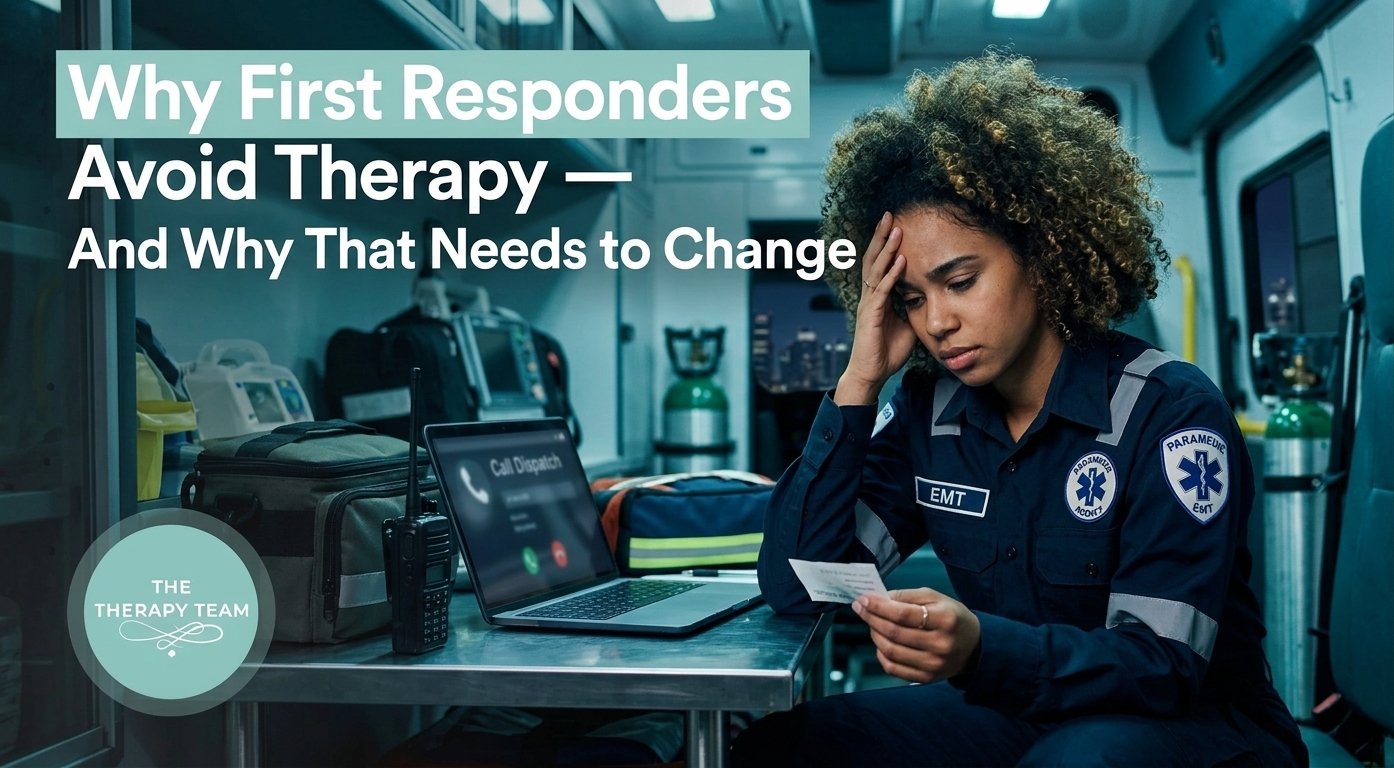
Understanding why first responders avoid therapy is critical if we want to change the outcome for the paramedics, firefighters, police officers, and dispatchers who protect our communities every day — often at a steep personal cost. Despite facing repeated exposure to trauma, first responders remain one of the least likely groups to seek mental health support.
This isn't a personal failing. It's the result of deeply embedded cultural, professional, and systemic barriers. Let's break down why this happens — and what's finally starting to change.
The Scope of the Problem
First responders face significantly higher rates of PTSD, depression, and burnout compared to the general population, largely due to repeated exposure to traumatic incidents. Yet despite this elevated risk, treatment-seeking rates remain disproportionately low.
First Responder Mental Health: By the Numbers
| Factor | General Population | First Responders |
|---|---|---|
| Repeated trauma exposure | Rare | Routine part of the job |
| Cultural stigma around therapy | Present but declining | Historically strong, still significant |
| Reporting mental health struggles | More socially accepted | Often seen as a liability or weakness |
This gap between exposure and treatment is exactly why targeted, trauma-informed support for this population matters so much.
5 Reasons First Responders Avoid Therapy
1. Fear of Being Seen as "Weak" or "Unfit for Duty"
In high-stakes professions built around composure and control, admitting emotional struggle can feel like professional suicide. Many first responders worry that seeking help will affect their standing with colleagues or supervisors.
2. Concerns About Career Impact
There's a persistent (and often inaccurate) fear that a mental health record could jeopardize promotions, assignments, or even job security — leading many to suffer in silence rather than risk their career.
3. Cultural Norms Around Toughness
First responder culture often prizes stoicism and self-reliance. Asking for help can feel like it contradicts the very identity that drew someone to the profession in the first place.
4. Lack of Trauma-Informed, Specialized Providers
Generic therapy approaches don't always resonate with first responders, who often need providers who understand the specific nature of their work — shift work, chronic exposure, moral injury, and operational stress.
5. Normalization of Trauma Exposure
When traumatic incidents are simply "part of the job," many first responders don't recognize their own symptoms as something that warrants support — they've been conditioned to see it as normal.
The Real Cost of Avoiding Therapy
When mental health struggles go unaddressed, the consequences extend beyond the individual:
Increased risk of burnout and early retirement
Strained relationships with family and partners
Higher rates of substance use as a coping mechanism
Greater risk of PTSD symptoms worsening over time
Reduced job performance and increased safety risks on the job
A Real-World Shift: Departments Embracing Change
Increasingly, fire departments, police services, and paramedic units across Canada are implementing peer support programs and partnering with trauma-informed therapists to reduce stigma. These initiatives are showing early promise — normalizing conversations around mental health and making therapy feel like a proactive tool rather than a last resort.
This shift reflects a broader recognition: seeking support isn't a sign of weakness — it's an operational necessity for long-term career sustainability.
How Specialized Therapy Helps First Responders
Working with a provider who offers First responder therapy Ottawa, ON means working with someone who understands:
The unique operational stressors of emergency response work
Shift work's impact on mental and physical health
Moral injury and the weight of split-second decisions
The specific presentation of PTSD in high-exposure professions
The importance of confidentiality and trust in this line of work
Because many first responders carry cumulative trauma from years on the job, Therapy for First Responders in Ottawa, ON often incorporates trauma-informed techniques specifically designed for high-stress, high-exposure professions.
What Makes First Responder Therapy Different?
Unlike general talk therapy, effective first responder support typically includes:
Understanding of operational culture — no need to explain shift work or chain of command
Trauma-specific techniques — approaches suited for cumulative and acute trauma
Confidentiality assurances — addressing career-related fears directly
Flexible scheduling — accommodating irregular shift patterns
Peer-informed approaches — recognizing the value of shared professional experience
Final Thoughts
The reasons first responders avoid therapy are rooted in decades of cultural conditioning — but that culture is shifting. Seeking support isn't about admitting weakness; it's about ensuring first responders can continue doing the work they're passionate about, sustainably and safely, for the long term.
Frequently Asked Questions (FAQs)
-
Due to repeated, cumulative exposure to traumatic incidents as a routine part of their job, first responders face significantly elevated PTSD risk compared to the general population.
-
Confidential, trauma-informed therapy is designed to protect client privacy. Seeking support is increasingly recognized within departments as proactive, not detrimental to career standing.
-
It incorporates an understanding of operational culture, shift work, moral injury, and trauma-specific techniques tailored to high-exposure professions.
-
Yes. Family members often experience secondary stress and can benefit from support in understanding and coping with the unique challenges of a first responder household.
-
Signs like sleep disturbances, irritability, emotional numbness, or increased substance use following incidents are strong indicators that professional support could help.